
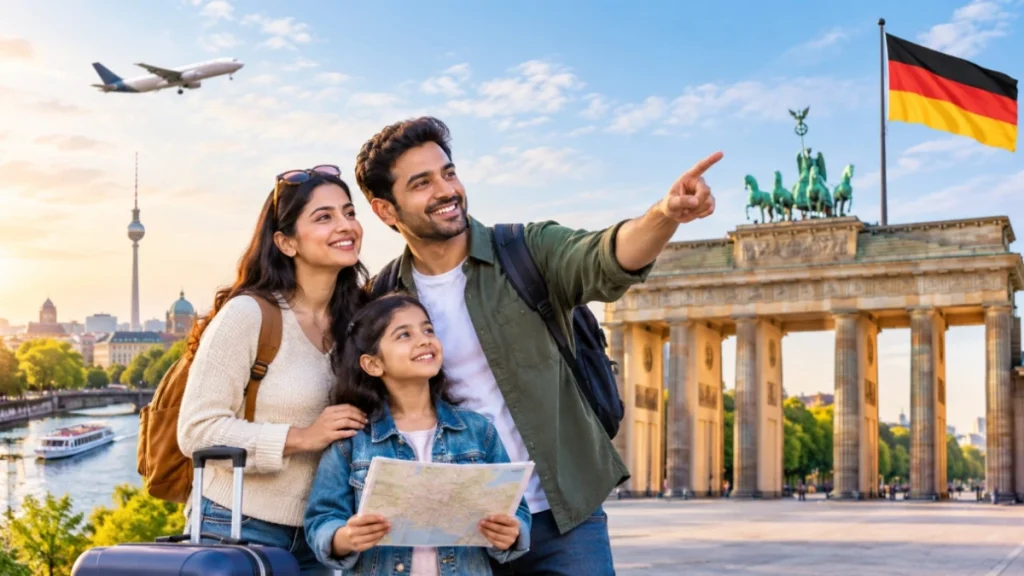
On a lot of Indian Schengen packages, Germany is the quick stop: a Rhine cruise, maybe a day trip, and on to the next country. Germany’s tourism board wants that to change, and it has put a number on it. By 2030, it hopes to double the nights Indian visitors spend in the country every year.
The target came from Petra Hedorfer, CEO of the German National Tourist Board (GNTB), in an interview with PTI published on October 4, 2026. One detail matters here: the goal is about overnight stays, not the total number of visitors. Germany isn’t just asking Indians to come. It wants them to stay longer, see more of the country and return.
Here’s a look at what the numbers show, how flights and visas fit in, and what it could mean for your next trip.
What Germany Has Announced
Hedorfer called the doubling of annual overnight stays a longer-term ambition and described it as a direction for sustained development. How fast Germany gets there will depend on connectivity, accessibility and market conditions. India is treated as a strategic growth market, helped by rising travel aspirations and long-standing economic and cultural ties.
The pitch is about quality as much as quantity. Longer holidays, more time in different regions and repeat visits sit at the centre of the plan, with the idea of turning India’s potential into lasting value for travellers and for Germany’s tourism partners.
She was careful about the near term, too. For the current year, the board is cautiously optimistic, since demand shifts with flight availability, travel costs and the wider economy.
Indian Tourism in Germany by the Numbers
The trend is positive, though the growth is gradual:
- 2025: 9,28,635 overnight stays by Indian visitors, up 3.4% on the year before
- January to July 2026: 5,37,565 overnight stays, up 2.9% year on year
- July 2026: around 85,400 overnight stays, up 3.6% on July last year
- Economic value: GNTB research estimates that trips from India brought in roughly €1.3 billion for Germany in 2025
India and China are also among the fastest-growing groups in global tourism, which helps explain why Germany is paying close attention to Indian travellers.
Why Germany Wants Indians to Stay Longer
The Week’s reporting gives a useful picture of the problem. It describes a “postcard vacation” pattern, where Indian groups on Schengen packages skim through the Rhine region and leave without spending a night. Travellers heading to Paris or Amsterdam, by comparison, tend to stay longer and spend more.
Part of this comes down to how itineraries get built. Indian travel agents often lead with Switzerland and Paris, and Germany gets slotted in as a cruise or a short excursion. Most Indian visits to Germany have also been tied to something other than leisure:
- Business trips for the country’s many trade fairs and exhibitions
- Study and work, from engineering to nursing
- Transit, especially on Lufthansa routes to North America
Germany also has an image challenge. The Week notes that it has struggled with a reputation for being a bit serious in the West, while among Indians the bigger issue is that it simply isn’t the first place that comes to mind for a holiday. GNTB has even run a campaign built around the line “Stay a little longer!”
Flights: Direct Connectivity from India to Germany
Getting to Germany easily is a big part of the plan. Frankfurt and Munich currently have direct links to five major Indian cities. Data from ForwardKeys/Amadeus, quoted by GNTB, adds some detail:
- 3,510 flights ran from India to Germany in 2025
- 7,44,252 seats were available between January and August 2026, around 5% more than the same months of 2025
Hedorfer sees direct flights as a major enabler of growth, particularly for a long-haul market like India. GNTB would be glad to see more routes and capacity where demand justifies them, but those calls belong to airlines and depend on bilateral agreements. No new routes have been announced.
The board also sees room to make Germany easier to reach for travellers from India’s Tier-II cities. If you live in Punjab, Chandigarh or Mohali, that’s worth keeping an eye on, but for now it’s an aim, not a confirmed plan.
Germany Tourist Visa: What Indian Travellers Should Know
Better flights only help if the visa works out. Here’s what the sources say.
- Processing time. According to German missions, the average Schengen visa takes about 15 days once the application reaches the consulate. Hedorfer pointed out that getting an appointment and moving documents are separate steps with their own timelines. So the real wait, from starting your application to getting a decision, can be longer than 15 days.
- What travellers complain about. The Week reports heavy paperwork and plenty of running around. It also mentions applications refused without a clear explanation, and approvals for short stays even for people who have travelled in Schengen before, which means starting over the next time.
- Where GNTB stands. Hedorfer said visa rules and individual decisions are for the competent authorities to handle. The board’s part is to pass along what the tourism industry and travel-trade partners tell it. It also supports smoother visa procedures and noted that, with India’s growth potential, enough processing capacity and efficient systems are needed for tourism to keep growing.
A few practical tips (general guidance, not a guarantee of approval):
- Start early and check appointment availability well ahead of your dates
- Keep your documents complete, consistent and current
- Have a clear itinerary and purpose of travel
- Make sure your plans match what you state in your application
New Travel Trends Among Indian Visitors
- A more varied, experience-led traveller: Hedorfer said Indian travellers are becoming more varied, more digitally savvy and more focused on experiences. Germany is moving away from one standard itinerary for everyone and aims to speak to people based on their interests, life stage and travel history. GNTB is also running a Digital Travel Knowledge Tour in India to learn how Indians plan their trips.
- Weddings and honeymoons: Germany is going after high-potential segments such as wedding and honeymoon travel, not only business and transit passengers.
- The Oktoberfest effect: Oktoberfest shows what a big cultural event can do. The Week reports that flight bookings from India to Munich jumped by 60% between mid-September and October, which is the festival period. Hedorfer used it as an example of how well-known German experiences can drive travel, and said Germany has other signature events through the year.
- Families visiting students and professionals: Indians are now the largest group of international students at German universities, and many skilled professionals work there as well. Their families and friends make up a natural stream of visitors. According to Hedorfer, Germany is viewed as safe, welcoming and family-friendly.
- Food and hotels: For travellers who worry about meals, Germany is promoting its range of Indian and vegetarian restaurants. This summer, the Taj Group opened Hessischer Hof in Frankfurt, its first hotel in Continental Europe.
Beyond the Postcard: What to See and Do in Germany
Hedorfer’s list of attractions is long: lively cities, cultural heritage, more than 50 UNESCO World Heritage Sites, castles, natural scenery, food, shopping and regional experiences. The Week adds the Black Forest, Berlin’s history and nightlife, the Rhine and Munich’s beer gardens.
If you’re planning a longer trip, one easy approach is to combine a big city with a single region instead of squeezing everything into a day. You could land in Frankfurt or Munich, spend a few nights in the city, head out to the Black Forest or the Rhine valley, and finish in a second city. For repeat visitors, Germany’s regional variety is exactly the reason to come back.
What This Means for Indian Travellers
If Germany’s plan works, expect more choice: longer itineraries, regional packages, Indian and vegetarian-friendly dining, and ideas built around honeymooners and families. Flight capacity is growing, though new routes aren’t guaranteed.
The visa will remain the main hurdle, since appointments and paperwork can slow things down. If Germany is on your list, it’s worth planning a proper stay instead of a quick Schengen stop, and starting your visa preparation early.
Planning Your Germany Trip? Get Expert Help with Your Tourist Visa
For many Indian travellers, the toughest part of a Germany trip isn’t the flight or the itinerary. It’s the paperwork, the documents and getting the timing right.
Abroad Gateway, based in Chandigarh and Mohali, can guide you through the tourist visa process, from the document checklist and application support to itinerary planning. Whether it’s your first trip, a honeymoon or a family visit, our team can help you get ready with confidence.
Book a Free Consultation for Your Germany Tourist Visa Now!